


PROVIDING BRAINSPOTTING & EMDR THERAPY FOR TRAUMA AND COUNSELING FOR WOMEN IN NASHVILLE AND VIRTUALLY THROUGHOUT TENNESSEE, IDAHO, AND CALIFORNIA.
Eye Movement Desensitization
and Reprocessing
EMDR – Your compass to inner peace.
The healing lens: EMDR and the art of physical and emotional restoration.
Tapping into your inner strength: Holistically discovering freedom with EMDR therapy.
Are you experiencing . . .
Intrusive Memories: Persistent and distressing memories that keep coming back, sometimes as flashbacks or nightmares.
Emotional Distress: Intense emotions such as fear, sadness, anger, or guilt that are difficult to manage and interfere with daily life.
Avoidance: Actively avoiding people, places, or activities that remind the individual of the traumatic experience.
Hyperarousal: Feeling on edge, easily startled, or having trouble sleeping and concentrating.
Negative Self-Beliefs: Developing negative thoughts about oneself, such as feeling unworthy or blaming oneself for the traumatic event.
Mood Swings: Sudden and intense shifts in mood that seem disproportionate to the current situation.
Interpersonal Challenges: Struggling with relationships, trust issues, or difficulty forming connections with others.
Sense of Numbness: Feeling emotionally detached, as if there's a lack of connection to one's own feelings or experiences.
Impact on Daily Functioning: Difficulty in functioning at work, in relationships, or in daily activities due to the lingering effects of trauma.
Physical Symptoms: Experiencing unexplained physical symptoms or chronic pain that may be related to unresolved trauma.
If you’re open to a body-centered approach to healing and a non-linear, flexible way to heal your discomfort for good, EMDR may be for you!


EMDR:
A powerful therapy for healing trauma and emotional stress.
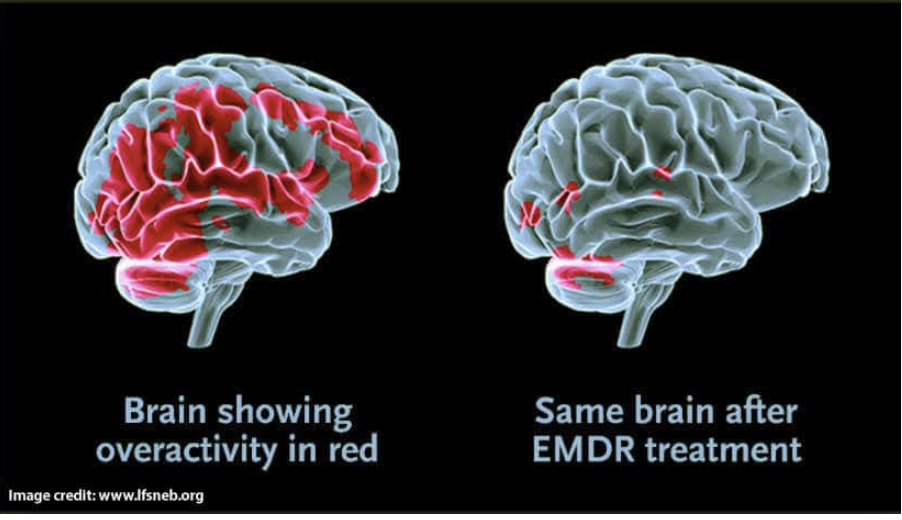
EMDR, or Eye Movement Desensitization and Reprocessing has become the most thoroughly researched method used in the treatment of trauma and is recommended by the National Institute for Health and Clinical Excellence (NICE) as an effective treatment for PTSD and many other presenting concerns. Simply put, when we have a disturbing experience, it gets stored in the brain in a way that our human system feels that event is either going to happen again at any moment (symptoms associated with memories), or that it is happening right now (body is ready to react at any moment). When our systems are triggered by something that reminds us of that disturbing experience, the brain reacts as if the original disturbing event is, indeed, happening. EMDR focuses less on the traumatic event itself and more on the disturbing emotions and symptoms that result from the experience.
EMDR helps to move the storage of disturbing memories to a more functional part of the brain (reprocessing) that can experience the event as actually being in the past (desensitization). EMDR is an effective addition to traditional counseling and psychotherapy.
In addition to treating trauma and PTSD symptoms, EMDR has been proven to help:
Anxiety and panic attacks
Depression
Stress
Phobias
Sleep problems
Grief
Addiction
Chronic pain relief
Self-esteem
Performance anxiety
Among other areas!
Phobias
…and many other issues
What else can EMDR help with?
EMDR serves as a therapeutic tool that can assist with:
-

Emotional Wellbeing
It lessens the impact of challenging memories, making them less emotionally distressing.
-

Cognitive Shift
It facilitates a change in perspective, helping you view difficult experiences in a new and empowering light.
-

Improved Sleep and Relaxation
If distressing memories affect your sleep or leave you on edge, EMDR can contribute to better sleep and a heightened sense of relaxation.
-

Rediscovering Yourself
Tough experiences can alter how we see ourselves. EMDR helps you reclaim your identity, free from the burdens of the past.

In a nutshell: the eight phases of the EMDR journey
-
This is like the introduction to your story. Your therapist will ask about your past and what's bothering you. It's important to fully share your feelings and experiences.
-
Think of this as getting ready for a journey. Your therapist helps you feel safe and teaches you some tools to manage stress. It's like packing your emotional backpack.
-
Imagine your therapist as a detective. They figure out which memories are causing you the most trouble. They help you pick the memories you want to work on during EMDR.
-
This is the heart of EMDR. You talk about the tough memories while doing something like following your therapist's fingers with your eyes. It's like cleaning up the messy parts of your mind.
-
This step is about putting in the good stuff. You add positive thoughts and feelings to replace the tough ones. It's like planting flowers in your mental garden.
-
Your therapist helps you notice any tension or discomfort in your body related to the memories. It's like checking if your emotional backpack is getting lighter.
-
Picture this as the end of a chapter. Your therapist makes sure you feel okay before leaving the session. It's like securing your emotional backpack before taking a break.
-
This is like checking your progress. Your therapist sees how you're doing and helps if there's more to work on. It's like making sure your emotional backpack is getting lighter and lighter over time.

EMDR FAQs
-
A: Determining the suitability of EMDR for a client involves a careful assessment by a trained therapist. Here are some considerations that can help us decide if EMDR is a suitable approach for you:
Trauma History:
EMDR is particularly designed to address trauma and distressing memories. If you have a history of trauma, whether it's a single event or multiple experiences, EMDR may be considered.
Your Readiness:
I can help assess your readiness and willingness to engage in the therapeutic process. EMDR can be intense as it involves exploring and processing emotions related to traumatic experiences. This typically takes some emotional preparation on your part.
Stability and Safety:
Together we will work through and consider your current mental and emotional stability. If you are in acute crisis or dealing with unmanaged mental health issues, we may decide to stabilize these issues before starting EMDR to ensure your overall safety.
Your Preferences:
It's important to consider your preferences and comfort level with the therapeutic approach. Some clients may be drawn to the structured nature of EMDR, while others may prefer different therapeutic modalities.Previous Treatment Response:
If you have already tried other therapeutic approaches without significant progress, EMDR might be considered as an alternative or complementary method. It can be particularly useful when traditional talk therapy alone hasn't fully addressed your trauma symptoms.
Collaborative Decision-Making:
The decision to use EMDR should be a collaborative one between the two of us. Open communication about the therapy process, potential benefits, and any concerns is essential.
Assessment of Specific Symptoms:
I will continually assess the specific symptoms you are experiencing. EMDR is known for its effectiveness in addressing symptoms such as flashbacks, nightmares, and intrusive memories associated with trauma. -
A: The mind can often heal itself naturally, much in the same way the body heals itself. Much of this natural regenerative mechanism occurs during sleep, when our brain is in its most regenerative state, and particularly during rapid eye movement (REM) sleep. In a REM state, the eyes move back and forth in a bi-lateral capacity, which facilitates communication across the left and right brain hemispheres. This Dual Attention Stimulation (DAS) is guided by the therapist as the client maintains awareness of present experiences while simultaneously recalls memories and emotions around the disturbing experience. The result is that events that used to trigger the brain into over-reaction no longer have that effect.
-
A: EMDR has demonstrated significant efficacy in the treatment of trauma-related symptoms. Numerous research studies and clinical trials support its effectiveness in reducing the impact of distressing memories and alleviating symptoms associated with trauma. The therapy promotes positive cognitive restructuring, empowering you to view yourself and your experiences in a more adaptive and constructive light. EMDR's success extends beyond traditional talk therapy, offering a structured and targeted method for addressing the often challenging effects of trauma. As with any therapeutic approach, individual responses may vary, but the substantial body of evidence supporting EMDR underscores its efficacy as a valuable tool in trauma treatment.
-
A: The timeframe for experiencing results can vary among individuals. Some people notice positive changes after just a few sessions, while others may take longer. It depends on the nature of your experiences and how you respond to the therapy.
-
A: Yes, EMDR can be integrated into a comprehensive treatment plan that includes other therapeutic modalities. We can work together to determine the most effective combination of approaches based on your unique needs and goals.

ready to get started?